Give every new hire a strong start.
Without starting from scratch every time someone joins.
Most onboarding starts with good intentions…
…and quickly turns into a mix of scattered docs, rushed conversations, and “just shadow someone for now.”
It’s usually built in the middle of everything else, so it ends up feeling more fragmented and harder to follow than it should be—for you and for them. You’ve probably seen (or experienced) the kind of first day that’s just hours of policies no one remembers, or information that doesn’t really land.
It’s not that you don’t care. It’s that no one’s had the time to step back and build something that actually works.
Where onboarding usually breaks down

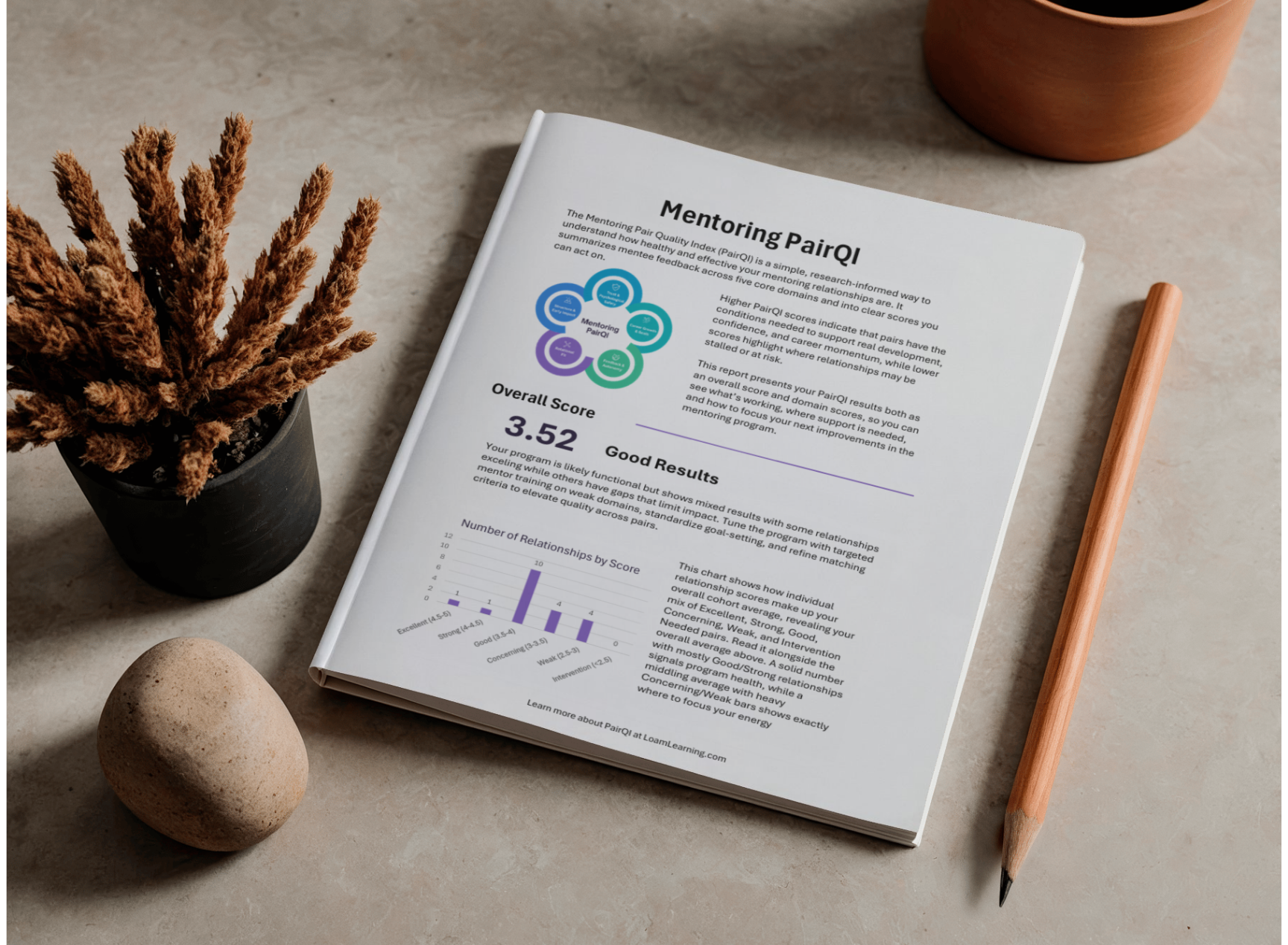
These mentoring plan templates are built for busy L&D and People teams who want mentoring to work without adding a new system to manage. Everything runs on familiar tools—PowerPoint, Word, Excel, and simple online forms—so you can move quickly, customize easily, and keep ownership in-house.
Mentee-led: Clear guidance that puts growth in the hands of participants, not another dashboard.
Lightweight but structured: Enough structure to keep pairs on track, without over-engineering.
Built from real practice: Informed by 15+ years designing and running development programs in a range of industries.